The next million years by Charles Galton Darwin
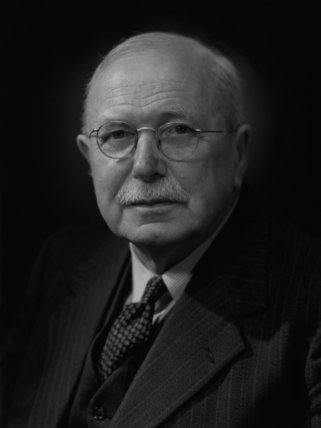
Sir Charles Galton Darwin, KBE, MC, FRS was an English physicist who served as director of the National Physical Laboratory during the Second World War. He was the son of the mathematician George Howard Darwin and a grandson of Charles Darwin. More at Wikipedia
Hormonal modification
“Another type of discovery may be connected with hormones, those internal chemical secretions which so largely regulate the operations of the human body. The artificial use of hormones has already been shown to have profound effects on the behaviour of animals, and it seems quite possible that hormones, or perhaps drugs, might have similar effects on man. For example, there might be a drug, which, without other harmful effects, removed the urgency of sexual desire, and so reproduced in humanity the status of workers in a beehive. Or there might be another drug that produced a permanent state of contentment in the recipient—after all alcohol does something like this already, though it has other disadvantages and is only temporary in its effects. A dictator would certainly welcome the compulsory administration of the “contentment drug” to his subjects.” p183
Oligarchical monopoly
“Widespread wealth can never be common in an overcrowded world, and so in most countries of the future the government will inevitably be autocratic or oligarchic; some will give good government and some bad, and the goodness or badness will depend much more on the personal merits of the rulers than it does in a more democratic country.” p.194
Normative government
“To think of it as possible at other times is a misunderstanding of the function of government in any practical sense of the term. If the only things that a government was required to do were what everybody, or nearly everybody, wanted, there would be no need for the government to exist at all, because the things would be done anyhow; this would be the impracticable ideal of the anarchist. But if there are to be starving margins of population in most parts of the world, mere benevolence cannot suffice. There would inevitably be ill feeling and jealousy between the provinces, with each believing that it was not getting its fair share of the good things, and in fact, it would be like the state of affairs with which we are all too familiar. If then there is ever to be a world government, it will have to function as government do now, in the sense that it will have to coerce a minority – and indeed it may often be a majority – into doing things they do not want to.” p.191
Download
- George Pember Darwin (1928–2001) worked developing computers, and then (1964) married Angela Huxley, daughter of David Bruce Huxley. She was also a granddaughter of the writer Leonard Huxley and a great-granddaughter of Thomas Huxley, “Darwin’s Bulldog”.
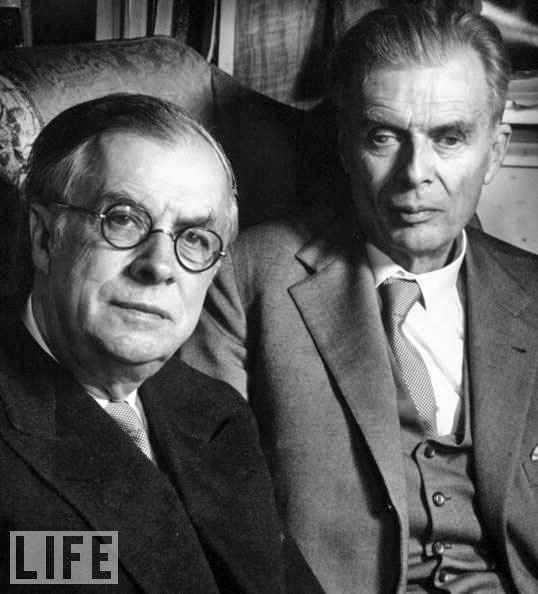
After the death of his first wife, Leonard married Rosalind Bruce (1890–1994), and had two further sons. The elder of these was David Bruce Huxley (1915-1992), whose daughter Angela Huxley married George Pember Darwin, son of the physicist Sir Charles Galton Darwin (and thus a great-grandson of Charles Darwin married a great-granddaughter of Thomas Huxley). The younger son (1917-2012) was the Nobel Prize winner, physiologist Andrew Fielding Huxley.
en.wikipedia.org/wiki/Huxley_family
Further References
Plain numerical DOI: 10.1037/a0013339
DOI URL
directSciHub download
Show/hide publication abstract
Plain numerical DOI: 10.1146/annurev.genet.35.102401.090055
DOI URL
directSciHub download
Show/hide publication abstract
Plain numerical DOI: 10.1136/jme.24.2.99
DOI URL
directSciHub download
Show/hide publication abstract
Plain numerical DOI: 10.1038/064659b0
DOI URL
directSciHub download
Show/hide publication abstract
Plain numerical DOI: 10.1086/374096
DOI URL
directSciHub download
Show/hide publication abstract
Plain numerical DOI: 10.1016/B978-0-12-374984-0.00060-7
DOI URL
directSciHub download
Show/hide publication abstract
Plain numerical DOI: 10.1086/521468
DOI URL
directSciHub download
Show/hide publication abstract
Plain numerical DOI: 10.1007/s12115-008-9058-8
DOI URL
directSciHub download
Show/hide publication abstract
Plain numerical DOI: 10.1111/j.1469-185X.2008.00036.x
DOI URL
directSciHub download
Show/hide publication abstract
Plain numerical DOI: 10.1016/S1472-6483(10)62222-5
DOI URL
directSciHub download
Show/hide publication abstract
Plain numerical DOI: 10.1177/0013124510380723
DOI URL
directSciHub download
Show/hide publication abstract
Plain numerical DOI: 10.1111/j.1740-9713.2011.00507.x
DOI URL
directSciHub download
Show/hide publication abstract
Julian Huxley, UNESCO, and Eugenics
unesco“It is, however, essential that eugenics should be brought entirely within the borders of science, for, as already indicated, in the not very remote future the problem of improving the average quality of human beings is likely to become urgent; and this can only be accomplished by applying the findings of a truly scientific eugenics.”
Sir Julian Sorell Huxley
From UNESCO Its Purpose and Its Philosophy
Plain numerical DOI: 10.2307/442317
DOI URL
directSciHub download
Show/hide publication abstract
Plutocracy/Elitism
A plutocracy or plutarchy is a society that is ruled or controlled by people of great wealth or income. The first known use of the term in English dates from 1631. Unlike systems such as democracy, capitalism, socialism or anarchism, plutocracy is not rooted in an established political philosophy.More at Wikipedia
In a “plutonomy”, according to Citigroup global strategist Ajay Kapur, economic growth is powered by and largely consumed by the wealthy few.
plutonomyPlain numerical DOI: 10.3898/NewF.80/81.03.2013
DOI URL
directSciHub download
Show/hide publication abstract
Plain numerical DOI: 10.1177/1748895812474282
DOI URL
directSciHub download
Show/hide publication abstract
Plain numerical DOI: 10.2753/JEI0021-3624440226
DOI URL
directSciHub download
Show/hide publication abstract
Plain numerical DOI: 10.1057/9781137304612
DOI URL
directSciHub download
Show/hide publication abstract
Plain numerical DOI: 10.1177/0095399712436658
DOI URL
directSciHub download
Show/hide publication abstract
Plain numerical DOI: 10.1177/0032329216683165
DOI URL
directSciHub download
Show/hide publication abstract
Plain numerical DOI: 10.1177/034003520302900204
DOI URL
directSciHub download
Show/hide publication abstract
Plain numerical DOI: 10.1257/mac.20150359
DOI URL
directSciHub download
Show/hide publication abstract
Plain numerical DOI: 10.14452/MR-059-11-2008-04_4
DOI URL
directSciHub download
Show/hide publication abstract
Plain numerical DOI: 10.17645/pag.v4i3.639
DOI URL
directSciHub download
Show/hide publication abstract
Plain numerical DOI: 10.1111/j.1467-7660.2011.01705.x
DOI URL
directSciHub download
Show/hide publication abstract
State Terrorism as a tool for social control
“Just as the Indian was branded a savage beast to justify his exploitation, so those who have sought social guerrillas, or terrorists, or drug dealers, or whatever the current term of art may be.” (Piero Gleijeses, as cited by Noam Chomsky)
Genetic factors involved in psychopathy
link.springer.com/content/pdf/10.1057%2F9780230307551_14.pdf
Psychopathy in Politics and Finance – Stefan Verstappen on GRTV
Official site of the U.S. government, U.S. Department of Justice
leb.fbi.gov/articles/featured-articles/the-corporate-psychopath
Further References
Plain numerical DOI: 10.1037/a0019709
DOI URL
directSciHub download
Show/hide publication abstract
Plain numerical DOI: 10.1017/S0954579413000497
DOI URL
directSciHub download
Show/hide publication abstract
Plain numerical DOI: 10.1016/j.neubiorev.2013.04.009
DOI URL
directSciHub download
Show/hide publication abstract
Plain numerical DOI: 10.1177/0093854811411153
DOI URL
directSciHub download
Show/hide publication abstract
Plain numerical DOI: 10.1037/a0029866
DOI URL
directSciHub download
Show/hide publication abstract
Plain numerical DOI: 10.1037/a0025084
DOI URL
directSciHub download
Show/hide publication abstract
Plain numerical DOI: 10.1016/j.neubiorev.2010.07.005
DOI URL
directSciHub download
Show/hide publication abstract
doi.org/10.3109/14397595.2014.899178
Show/hide publication abstract
Plain numerical DOI: 10.1192/bjp.bp.107.041582
DOI URL
directSciHub download
Show/hide publication abstract
Plain numerical DOI: 10.1016/j.psychres.2008.12.018
DOI URL
directSciHub download
Show/hide publication abstract
Intellectual covering
Intellectual cover is a usually negative term for sophisticated arguments provided by members of the intelligentsia to bolster a particular viewpoint, and thereby help it gain respectability. Usually the viewpoint is one that a supporter leaned toward anyway, but needed arguments to help him justify to others.More at Wikipedia
Related References
Show/hide publication abstract
Psychopolitics
Plain numerical DOI: 10.1057/sth.2009.7
DOI URL
directSciHub download
Show/hide publication abstract
Plain numerical DOI: dx.doi.org/10.1080/15240650109349145
DOI URL
directSciHub download
Show/hide publication abstract
Plain numerical DOI: 10.1037/0033-3204.30.1.133
DOI URL
directSciHub download
Show/hide publication abstract
Plain numerical DOI: 10.4324/9780203140529
DOI URL
directSciHub download
Show/hide publication abstract
Plain numerical DOI: 10.5195/HCS.2013.147
DOI URL
directSciHub download
Show/hide publication abstract
Plain numerical DOI: 10.1108/EDI-09-2012-0076
DOI URL
directSciHub download
Show/hide publication abstract
Plain numerical DOI: 10.1080/0449010X.1999.10704346
DOI URL
directSciHub download
Show/hide publication abstract
Plain numerical DOI: 10.1057/9780230603431
DOI URL
directSciHub download
Show/hide publication abstract
Plain numerical DOI: 10.1080/14742837.2012.696821
DOI URL
directSciHub download
Show/hide publication abstract
Plain numerical DOI: 10.1080/01436597.2017.1319277
DOI URL
directSciHub download
Show/hide publication abstract
Plain numerical DOI: 10.1057/sub.2013.14
DOI URL
directSciHub download
Show/hide publication abstract
Plain numerical DOI: dx.doi.org/10.1207/s15327949pac0504_3
DOI URL
directSciHub download
Show/hide publication abstract
Bordieu’s Habitus & Hexis
The term habitus (/ˈhæbɪtəs/) refers to ingrained habits, skills, and psychological/behavioral dispositions. It is the way that individuals perceive the social world around them and react to it. These dispositions are usually shared by people with similar backgrounds (such as social class, religion, nationality, ethnicity, education, profession etc.). The habitus is acquired through imitation (mimesis) and is the reality that individuals are socialized, which includes their individual experience and opportunities. Thus, the habitus represents the way group culture and personal history shape the body and the mind, and as a result, shape present social actions of an individual.
Pierre Bourdieu suggested that the habitus consists of both the hexis (the tendency to hold and use one’s body in a certain way, such as posture and accent) and more abstract mental habits, schemes of perception, classification, appreciation, feeling, and action. These schemes are not mere habits: Bourdieu suggested they allow individuals to find new solutions to new situations without calculated deliberation, based on their gut feelings and intuitions, which Bourdieu believed were collective and socially shaped. These attitudes, mannerisms, tastes, moral intuitions and habits have influence on the individual’s life chances, so the habitus not only is structured by an individual’s objective past position in the social structure but also structures the individual’s future life path. Pierre Bourdieu argued that the reproduction of the social structure results from the habitus of individuals (Bourdieu, 1987).
References
Plain numerical DOI: 10.1080/0142569042000236934
DOI URL
directSciHub download
Show/hide publication abstract
Plain numerical DOI: 10.2307/532672
DOI URL
directSciHub download
Show/hide publication abstract
Plain numerical DOI: 10.2307/2804264
DOI URL
directSciHub download
Show/hide publication abstract
Plain numerical DOI: 10.1111/j.1468-5914.2004.00255.x
DOI URL
directSciHub download
Show/hide publication abstract
Plain numerical DOI: 10.1007/978-94-007-0753-5_1519
DOI URL
directSciHub download
Show/hide publication abstract
Plain numerical DOI: 10.15603/2176-1043/el.v10n16p63-71 M4 – Citavi
DOI URL
directSciHub download
Show/hide publication abstract
Plain numerical DOI: 10.1177/1357034X12472543
DOI URL
directSciHub download
Show/hide publication abstract
Plain numerical DOI: 10.1111/1467-954X.12345
DOI URL
directSciHub download
Show/hide publication abstract
Plain numerical DOI: 10.1016/j.ssresearch.2012.08.002
DOI URL
directSciHub download
Show/hide publication abstract
Plain numerical DOI: 10.1080/02680930210140257
DOI URL
directSciHub download
Show/hide publication abstract
Plain numerical DOI: 10.1177/0170840603024003909
DOI URL
directSciHub download
Show/hide publication abstract
Plain numerical DOI: 10.1590/S0103-20702013000100001
DOI URL
directSciHub download
Show/hide publication abstract
Plain numerical DOI: 10.3406/arss.1986.2335
DOI URL
directSciHub download
Show/hide publication abstract
Plain numerical DOI: 10.1146/annurev.anthro.33.070203.143907
DOI URL
directSciHub download
Show/hide publication abstract
Plain numerical DOI: 10.1177/14661380022230624
DOI URL
directSciHub download
Show/hide publication abstract
Plain numerical DOI: 10.1111/0735-2751.00109
DOI URL
directSciHub download
Show/hide publication abstract
Plain numerical DOI: 10.1023/A:1011070710987
DOI URL
directSciHub download
Show/hide publication abstract
Plain numerical DOI: 10.1086/229967
DOI URL
directSciHub download
Show/hide publication abstract
Plain numerical DOI: 10.1080/0142569900110405
DOI URL
directSciHub download
Show/hide publication abstract